DELVE: verb - 1. To dig or excavate, especially to turn up earth with a spade; to uncover or extract by such means. 2. To research or investigate a subject thoroughly; to reach or penetrate to deeper or hidden qualities.
When the first production run of our Merica brand paintball boxes arrived from a new vendor in the spring of 2022 it presented a maddening technical enigma… design elements were visibly, irregularly distorted. The vendor insisted their machinery was flawless, and the contractor who originally built the Adobe Illustrator production files could not be contacted to walk us through how the assets were constructed.
Our internal team was running on an assumption that the distortions were a result of a mistake or miscalculation with the scale of the dieline template, resulting in the printer simply applying a uniform, single-axis scale to force the artwork onto their physical die-lines. I didn’t agree, as the distortion evident was not indicative of such a chain of events. I had questions.
I needed to dig deeper.
"Look beneath the surface... let not the several quality of a thing, nor its worth, escape thee."
- Marcus AureliusArchival Research
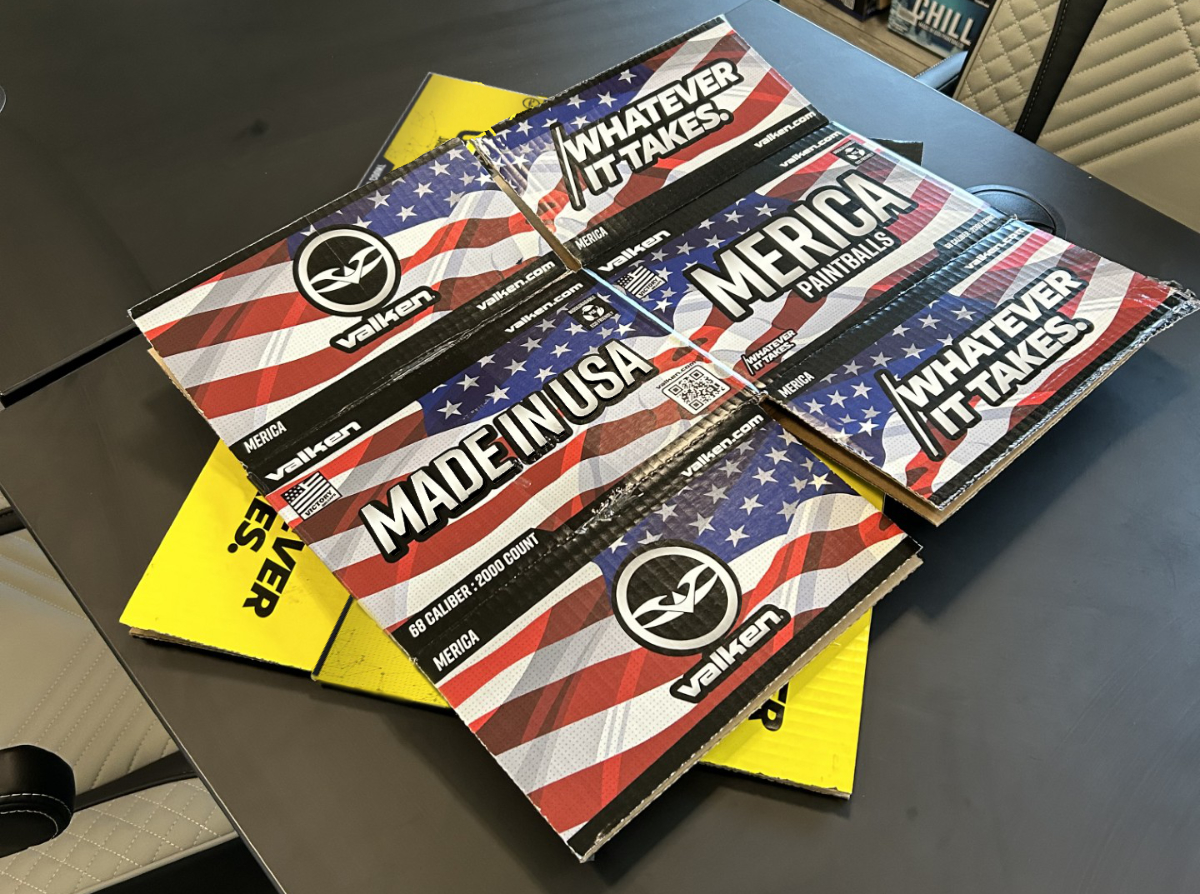 The Merica Mystery Paintball Box laid out on Valken's conference table
The Merica Mystery Paintball Box laid out on Valken's conference table.
Sitting at the office conference table, looking down at the flattened "Merica" box with its unexplained discrepancies, I assessed the current situation and immediate resources before me in trying to solve this mystery. There was no documentation from the contractor who produced the dieline template, no scope of what had been produced, and a live quality problem with an international vendor that had yet to be diagnosed. We just had the Illustrator File.
Before opening the design file, I initiated a forensic audit of institutional records, contract agreements, and historic manufacturing blueprints.
By analyzing past correspondence and the vendor’s original physical die-cut templates, I mathematically disproved the internal team’s single-axis scaling hypothesis.
With the documentation confirming the canvas framework was a perfect 1:1 match, the mystery deepened... the next clue must lay entirely hidden within the complex architecture of the production files themselves.
The topsoil was cleared... Time to dig deeper.
Site Gridding & Datum
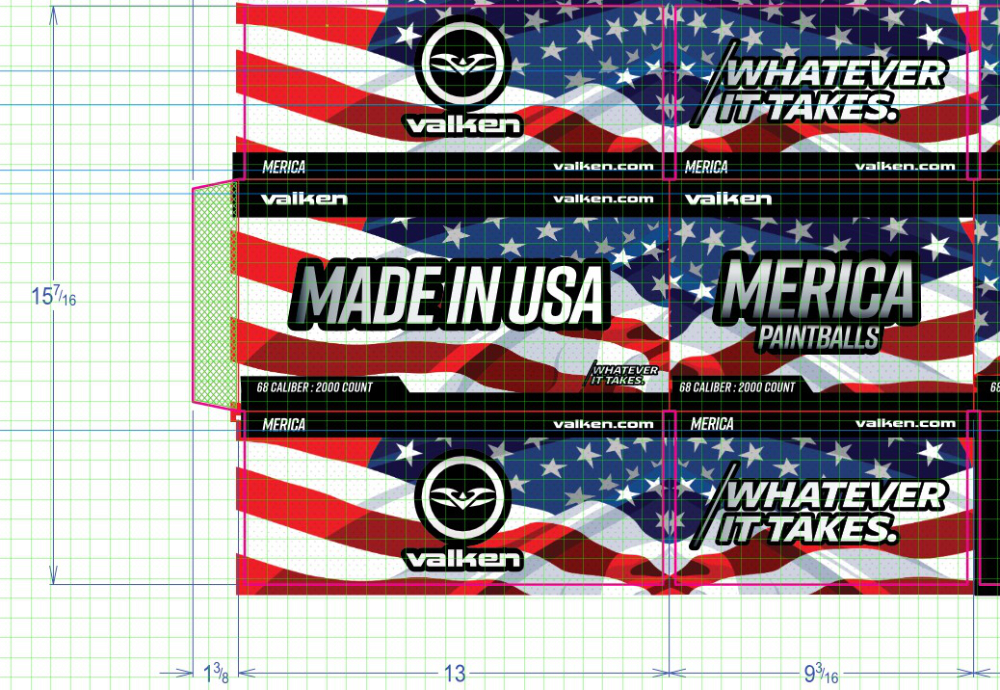 The Merica Mystery Paintball Box with it's investigative grid
The Merica Mystery Paintball Box with it's investigative grid.
To isolate the internal file discrepencies, I established a spatial baseline using historic packaging assets and mapped a custom coordinate grid across the defective Illustrator file.
This fixed geometric datum and a digital grid system allowed me to treat the document as an active archaeological site... methodically sifting through the dozens of complex, nested sub-layers... and through this process the next clue was uncovered: a distinct spatial pattern to the distortions, skewings, and color variations.
At this point my visual assessment was validated, but the reason behind the anomolies still eluded me. I needed to speak with the vendor... in China.
The fill was cleared... Time to dig deeper.
"If you can't explain it simply, you don't understand it well enough."
- Albert EinsteinLaw of Superposition
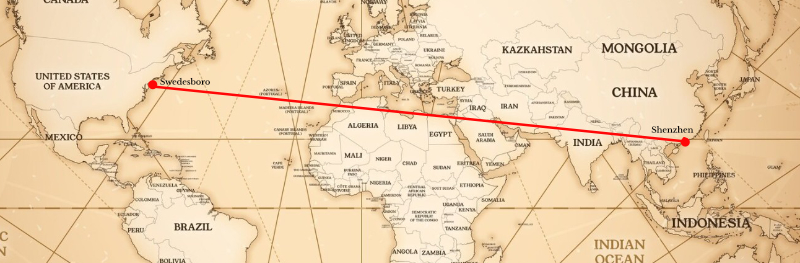
In archaeology and geology, the law of superposition states that the oldest layers are at the bottom, and each layer deposited on top represents a newer event. I had been working my way through the upper layers of this mystery and needed to get to the bottom.
In pursuit of answers, we initiated a phone meeting with our vendor representatives in Shenzhen, China. Recognizing that critical technical data gets lost in multi-tiered corporate communication, I bypassed front-facing account executives to align directly with the vendor’s print shop foreman.
To strip away the administrative and linguistic layers, I distilled my laser-mapped data into an ultra-simplified, foundational hypothesis focused on the lowest common denominator: the physical flexographic plates.
Partnering with our Mandarin-speaking logistics manager, we successfully pierced the language barrier, verified my technical thesis with the foreman, and reached a consensus on where the responsibility lay for the root issue.
By stripping away the noise, we uncovered these problems originated at the production level and were now in alignment to discover the origin of the anomalies.
The cultural deposit was cleared... Time to dig deeper.
Chain of Ownership
 How it felt solving this mystery.
Image courtesy of Lucasfilm Ltd. LLC / Paramount Pictures (Raiders of the Lost Ark © 1981). Utilized under Fair Use guidelines for non-commercial case study analysis.
During our technical discussion regarding the RIP engine, a lingering anomaly from my initial archival research clicked: the vendor's significantly below-market flexo pricing from the late-2021/early-2022 post-pandemic window.
I prompted my logistical manager to pursue a line of questioning regarding their flexographic equipment... specifically its age and acquisition.
After a pregnant pause, followed by a staccato exchange between vendor foreman and logistical manager, we were informed that they had purchased everything following the Great Recession of 2008. My next question was about their RIP (Raster Image Processor) software.
Paydirt...
The vendor was running an un-updated, legacy Esko FlexRip pipeline.... an outdated architecture incapable of parsing complex modern vector data.
The root cause of our graphical distortion rested entirely in their software provenance.
Bedrock... Time to rebuild.
objects "in situ"
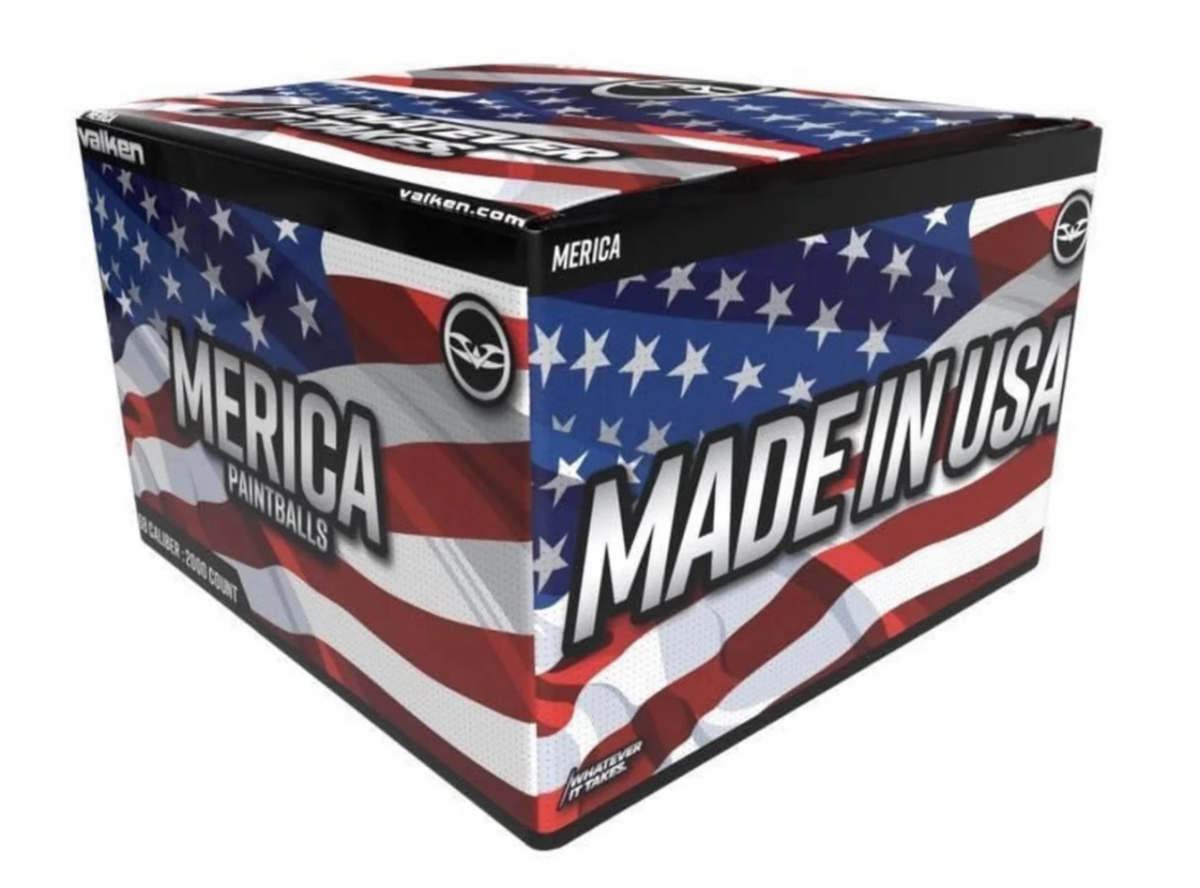 The Merica Paintball Box as intended.
The Merica box would soon see a redesign... along with Valken's entire catlog of paintball boxes.
"In situ" (Latin for "in place" or "on site") refers to objects, artifacts, or artworks that remain in their original or natural context. In archaeology, an object is in situ when it is found exactly where it was originally left, undisturbed by human or environmental forces.
In this instance it refers to anchoring every vector point, transparency, and text layer exactly where it belongs, ensuring the legacy RIP doesn't "shift the dirt" and distort the final artifact.
As we stepped into the reconstruction phase, the objective was clear: I had to preserve the original artwork’s integrity by keeping every visual object "in situ" while translating it into a language an antiquated system could comprehend.
To save the design from further mistranslations, I had to meticulously excavate, strip down, and rebuild the file from the bedrock up.
By stripping out modern PostScript features—flattening transparencies into flat color... sampled vectors, separating plates manually by layer, and outlining all typography... I delivered a fool-proof file that bypassed their RIP’s limitations.
This empirical proof enabled our CEO and purchasing lead to hold the vendor financially accountable for a flawless, cost-free reprint.
Site closed... asset preserved.
"We do not follow maps to buried treasure, and 'X' never, ever marks the spot."
- Dr. Henry Walton "Indiana" Jones Jr.Epliogue
Resolving the international print mystery proved my technical agility under pressure, earning the absolute trust of our executive team. I was immediately promoted to Creative Director... with full ownership of all Valken packaging going forward... and presented with my next challenge.
The company had recently achieved a major corporate milestone by reshoring the majority of their paintball manufacturing to the United States. Capitalizing on this domestic shift, the CEO and VP tasked me with leading a comprehensive packaging redesign centered around a patriotic American flag motif.
Sometimes you need to dig deep to rise high...